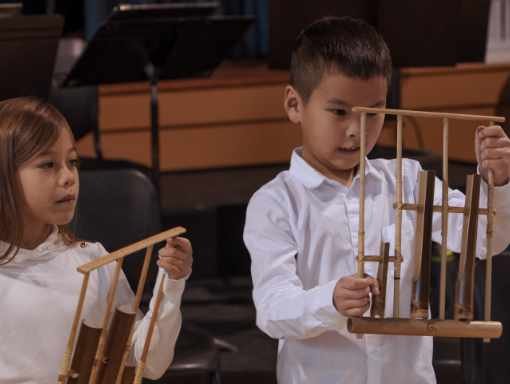
Where children begin

Mallets & Bars

For children 3 to 7 with no music experience at all. Rhythm first, on percussion, before a note is ever read.
Portrait · a three-year-old with a mallet raised, concentrating
About the program

The room for children who cannot yet read music.

COS introduces Mallets & Bars, which focuses on developing basic music skills through an ensemble of percussion instruments. This is a perfect training ground for young musicians to solve rhythmic and musical challenges. For those who aspire to learn melodic instruments such as strings or woodwinds, Mallets & Bars provides the foundation for becoming a well-rounded musician. The ensemble is open to musicians 3 to 7 years old and requires no previous music experience.
The first thirty minutes of every session run inside Kinder Orchestra, and that is deliberate. A three-year-old holding a mallet may only be able to play one note. But they play it inside a real orchestra, alongside children years ahead of them, and they hear that single note land inside the sound the whole group is making. That is the moment it catches. They are contributing to something far bigger than anything they could produce alone, on their very first Saturday, before they can read a note. It is the founder’s method applied at the youngest possible age: Dr. Hiao-Tsiun Ma wrote parts so a child who could play one note had a part with one note in it, and that note mattered to the piece.

At a glance
Mallets & Bars
Ages
3 to 7
Experience
None required
Meets
Saturdays, 1:00 to 2:30pm
Teacher
Renan Proença
Room
Classroom 1 and Orchestra Room 2
Note
First 30 minutes run inside Kinder Orchestra
Times, room, and faculty are from the published 2025-26 Saturday schedule and are rechecked each season.
See the whole Saturday
Wide · Mallets & Bars inside Kinder Orchestra, the youngest at the edge of a real ensemble
A three-year-old with a mallet raised
What comes next

Where Mallets & Bars leads.

The first thirty minutes each week run inside Kinder Orchestra, so children are already in the room with a real string ensemble before they join one. From here the usual route is Pre-Kinder or Kinder Orchestra, depending on the instrument a child takes up.
This is a genuine route to a seat in the top ensemble, not a holding pattern. Each semester a child can audition for the next room up when they are ready.
Read about where children go next:

Not sure where to start?

If your child has never touched an instrument, this is the room. Every child auditions so faculty can hear where they are, and no child is turned away.