The method, since 1962

Almost every child learns to speak.

Nobody auditions a toddler before letting them talk, and no first word is rejected for being one word. It is met, and built on. Our founder believed music worked the same way, and built a school around that belief. Sixty-four years later it is still how every child here is taught.
Portrait · a very young child mid-lesson, close, natural light
The problem he faced

Every children’s orchestra has the same problem.

Dr. Hiao-Tsiun Ma, a violinist, composer, and musicologist, fled China in 1936 and founded the Children’s Orchestra Society in New York in 1962. He faced the problem every children’s orchestra faces: the players are not at the same level, and a single score leaves most of them either lost or bored.
The usual solution is to filter. Audition, rank, admit the ones who can already play, and tell the rest to come back when they are better.

Full bleed · wide shot of a full rehearsal from behind the last stand
A very young child mid-lesson
What he did instead

He rewrote the music, not the children.

He wrote customized parts so that a beginner and an advanced player could sit in the same orchestra and play the same piece together, each part pitched to what that child could actually do, all of them adding up to the work as written.
A child who could play one note was given a part with one note in it, and that note mattered to the piece.
What follows from it

That is the whole method. Everything else is a consequence.

We audition every child

And turn none away. The audition decides what to write, not who gets in.

No waiting room

A beginner is never parked somewhere until they are ready. They start inside an ensemble.

What, not whether

The first question is what a child can do, never whether they are good enough yet.
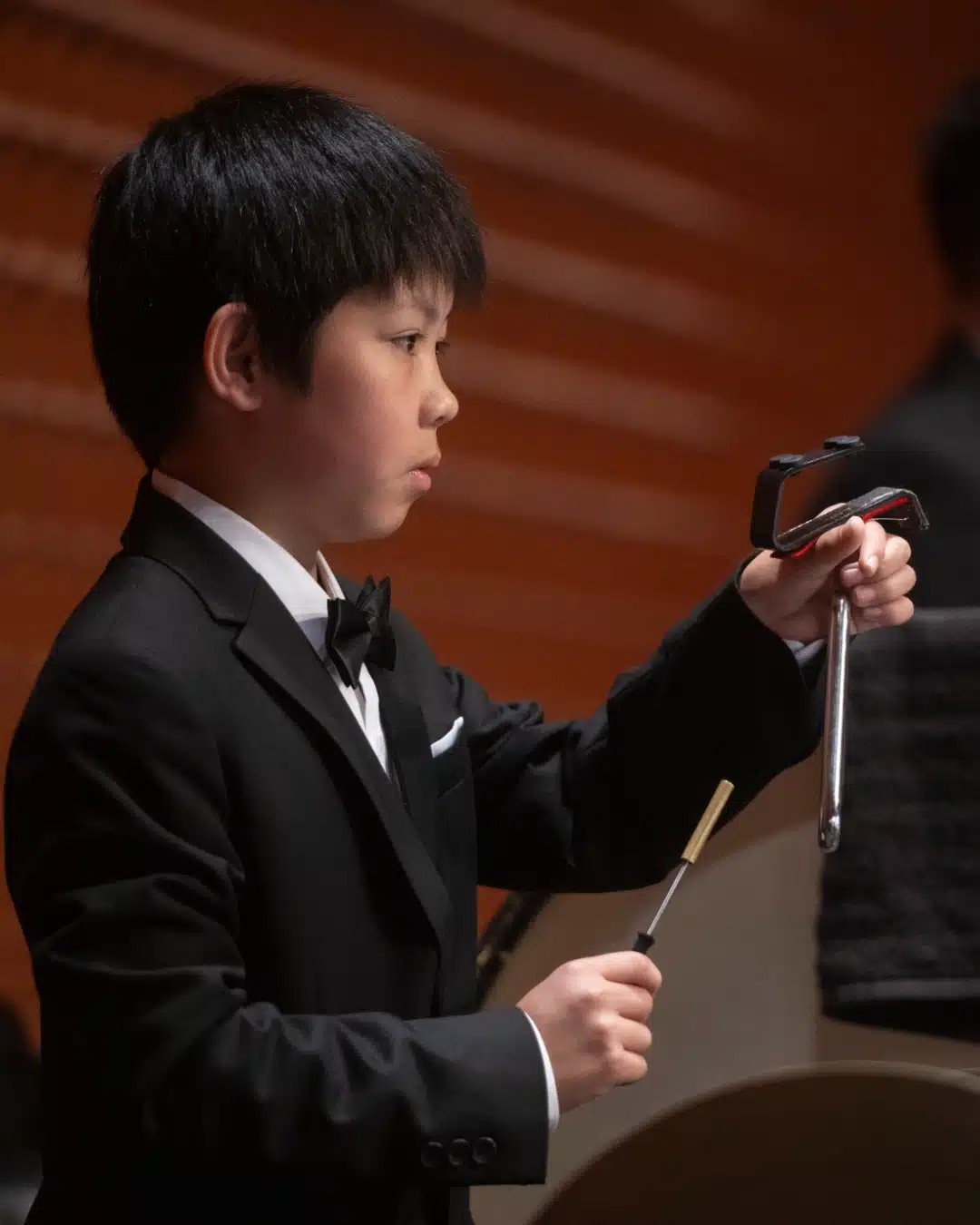
Mallets & Bars inside Kinder Orchestra · the youngest child, mallet raised
Still running, every Saturday

One note, inside a real orchestra.

The first thirty minutes of Mallets & Bars run inside Kinder Orchestra, so a three-year-old who can play a single note on a percussion instrument plays it inside a real ensemble rather than waiting somewhere else until they are ready.
What matters is what they hear. Their one note lands inside the sound the whole orchestra is making, and a child who hears that knows immediately that they are part of it. Practising alone is dull to a small child because the point of it is invisible. In a group the point is audible at once.
About Mallets & Bars
In her own words
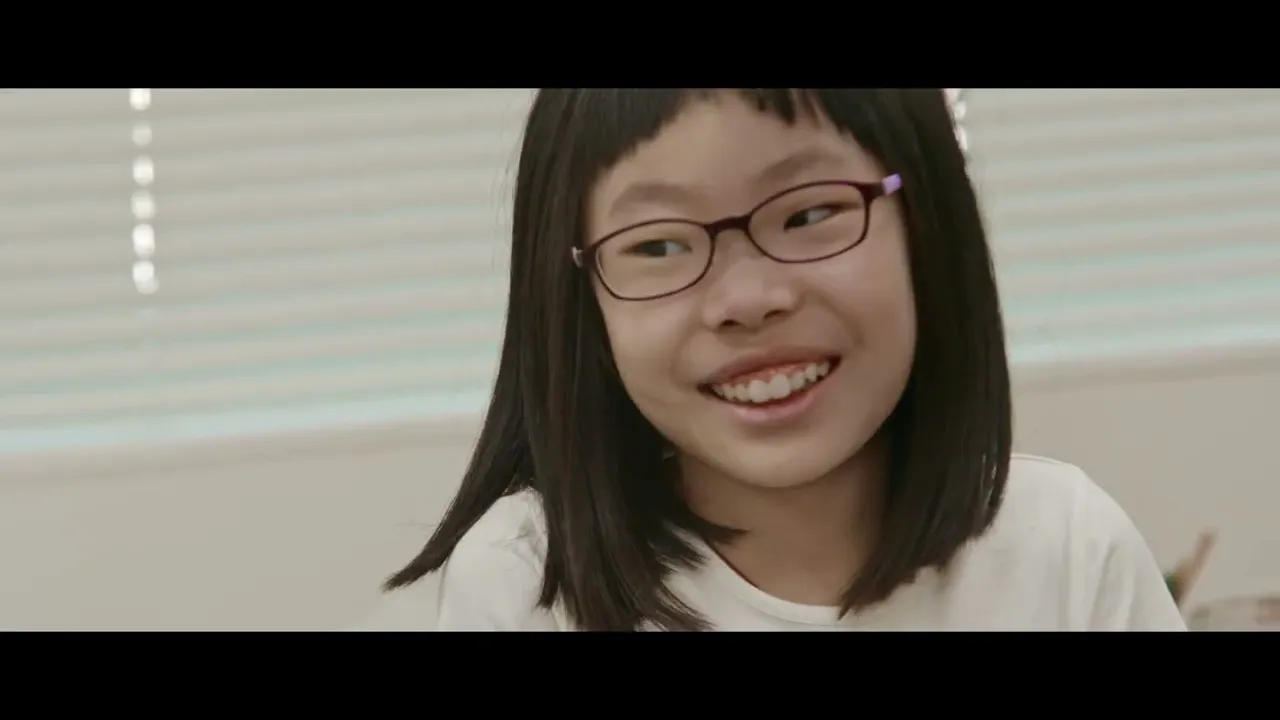
He came to America and found that American kids don’t practice so much, so he decided to put them in an orchestra. When you practice by yourself it’s kind of boring and you don’t really see the point of it. Whereas if you play in a group, the ones who are just beginning are motivated to imitate and look up to the ones who are ahead of them.
Dr. Yeou-Cheng Ma on her father, from the COS 50th Anniversary film
Play Pause
COS 50th Anniversary
Why it is not just a warm phrase

“Meeting a child where they are” is a clinical discipline here.

Dr. Yeou-Cheng Ma is a graduate of Radcliffe College and Harvard Medical School who has spent her career working with children with developmental disorders, at the Kennedy Center of the Albert Einstein College of Medicine and as Medical Director of the Mount Vernon School District.
Her research interests are the relationship between music and a young child’s temperament, and using music to find the inner language of children who struggle to communicate verbally. She lectures internationally on music and healing. She also teaches chamber music, ITAP, and private lessons here every Saturday. She is not an administrator who used to play.
Meet the faculty
Dr. Ma seated beside a student mid-lesson, listening · natural light, unposed
Three generations, one method

The faculty is increasingly made up of its own graduates.

1962
The founder
Wrote the tailor-made parts and taught the first two students, his own children, Yeou-Cheng and Yo-Yo. He conducted the orchestra until 1977.
1984
The revival
Restarted COS after seven dormant years, with $2,500 and eighteen students, and have led it for the forty-two years since.
Today
The return
Nearly half our faculty came up through these chairs. Olivia won the very first Discovery Competition in 1995 and now conducts the Kinder Orchestra, the youngest children in the building.
COS has been teaching for 57 years: fifteen under the founder, and forty-two since the revival. The seven dormant years in between are not counted.

Bring us your beginner.

It isn’t a test, and no child is turned away. We will find out what they can do, and then we will write them a part.